Find us on Google+ Lambeth Trees -->
Home Tree Surgeon Page
Showing posts with label Lambeth. Show all posts

Saturday, 23 February 2013

Cherry Tree with Phellinus and Tremates Versicolor


Nice natural growing Cherry tree has great color in the summer months and despite its windy location and several wood rotting fungal brackets is still standing. 


Sunday, 9 December 2012

Cherry Tree with honey fungus - Armillaria

Cherry tree that fell over due to wind throw, had honey fungus at the base

honey fungus at the base of Cherry tree
honey fungus

honey fungus at the base of Cherry tree
honey fungus

honey fungus at the base of Cherry tree
honey fungus

honey fungus at the base of Cherry tree
honey fungus

Functions Of Trees

  • Prevents soil erosion by wind and water, the roots bind and stabilize the soil.
  • Influence climate, provide shelter and effect temperature and moisture content of the air.
  • Provide habitat for wildlife.
  • Tree form along with color and texture of leaves and bark contribute to the beauty of the landscape.
  • Provide screens in man made setting's.
  • Give shade and absorb noise.

Does The Urban Landscape Support The Above?

Trees can obstruct views of unsightly buildings as well as obstruct views of accepted landmarks within towns and cities.  Why shouldn't the tree be felled? Why should it be kept? are debates that will continue to rage forever more:-)

I'm in favor of the tree 95% of the time... health and safety need to come first.

In the urban environment a problem that occurs so often is that trees are dominant.  It's never a problem though until the tree is affecting someone.  Once this happens the tree is on a hit list, the functions of trees do not matter at this point.

Trees are part of life and so what they do needs to be accepted and the places they are planted need to be chosen to allow 100% of the trees form to develop both above and below the ground.  There are places therefore where trees cannot be within the urban environment.

The biological functions of trees needs to be separated from the functions humans want the trees to provide and that changes from new plantings to established trees and to locations, then the deciding factor other than health and safety is cost.

The functions of trees does not need to be understood greatly but it does have to be considered.  The right tree right place phrase is key to success.

Tuesday, 17 July 2012

Oak Tree with Fungal Brackets possibly Sulphur Polypore Latest

Oak Tree with Fungal Brackets
Oak Tree with Fungal Brackets possibly Sulphur Polypore Latest photos taken approximately 2 weeks after the first.  They have grown some since and started to look more like the form they will take.

Definitely a wood rotter with the amount of hollow wood in a couple of the buttress roots.

Oak Tree with Fungal Brackets


see the first pictures


Saturday, 14 July 2012

Stag Beetle Lucanus cervus

Stag Beetle Lucanus cervus in Lambeth off Brixton Hill. Not in a park but a tree pit from a street tree.

this is probably a female.  Not looking the most healthy, I was unsure if she was alive or dead


Tuesday, 10 July 2012

Oak Tree with Fungal Brackets possibly Sulphur Polypore

Oak Tree with Fungal Brackets.  Not sure at this stage if it is Sulphur Polypore
Oak Tree with Fungal Brackets
At this stage  this Oak Tree with Fungal Brackets possibly Sulphur Polypore is difficult to identify.  The yellow of the brackets immediately suggests Laetiporus sulphurus, however, the round shape of the brackets is not consistent with other pictures I have taken of this Polypore.


Oak Tree with Fungal Brackets.  Not sure at this stage if it is Sulphur Polypore
Root Flare behind bracket is hollow
The root flare behind this bracket is hollow.  More or less impossible to spot without the bright color of the bracket standing out against the dark bark of this Oak tree.


Tuesday, 26 June 2012

Innonotus hispidus On Ash Trees

Innonotus hispidus On Ash Trees

some picture taken yesterday of this fungus emerging.

Innonotus hispidus On Ash Trees
Have removed trees and sections of trees when this bracket has been spotted.  The level of deterioration varies greatly.  These particular trees do not have any significant signs of die back but the effects of this bracket cannot be underestimated. 


Friday, 22 June 2012

Tree Pruning or Tree care


Tree Pruning or Tree care,  the following picture is a perfect example of why, "If you are a tree owner you should have a tree care program for your trees"

This Robinia - Robinia pseudo acacia is a mature tree, it has been in place for a minimum of forty years and quite obviously never been thought of as a problem or thought of as "somebody elses problem".

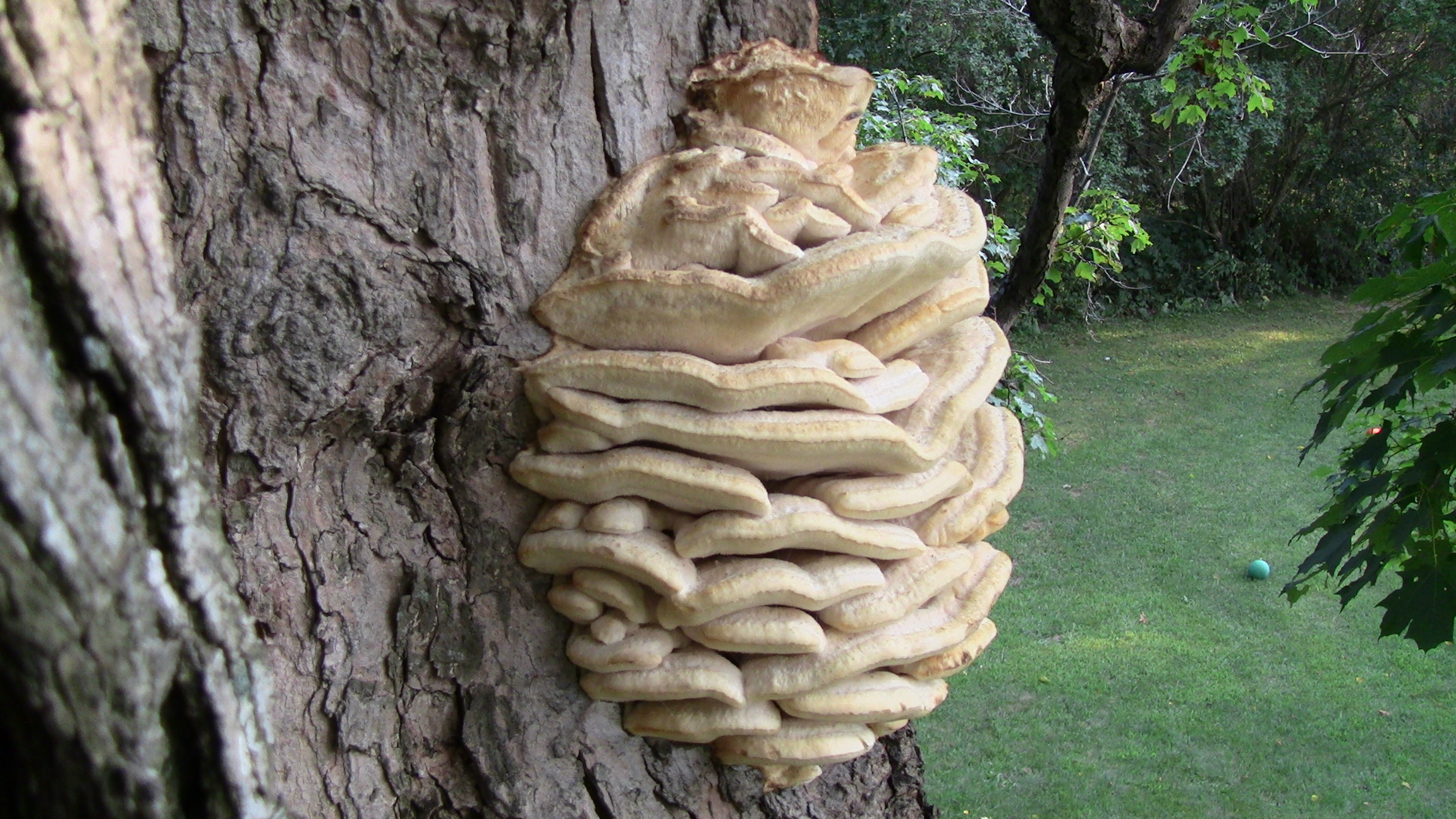
 there are literally only a couple of options here, the owner has to change the construction of the wall if the tree is to remain and not be felled.

Tuesday, 19 June 2012

Tremates versicolor on Apple Tree

Tremates Versicolor on Apple Tree, this tree was definitely in decline when I came across it.  Because of its location it will be a little dangerous to leave it in situ for too much longer.


Sunday, 17 June 2012

Climacodon septentrionalis or Laetiporus sulphureus - Sulphur Polypore

Climacodon septentrionalis or Laetiporus sulphureus - Sulphur Polypore, could definitely be confused with each other

Laetiporus sulphureus - Sulphur Polypore On Robinia

This picture is from http://en.wikipedia.org/wiki/File:Climacodon_septentrionalis_134149.jpg

see more pictures of Sulphur Polypore


To aid identification I have listed these two together as identification may be difficult from ground level especially if its a bright day.

The Climacodon septentrionalis has been inserted from wikipedia.org

Sunday, 10 June 2012

Ganoderma On Sorbus

This is a great looking Ganoderma On Sorbus.  Probably the best shot of this bracket I have taken.


Saturday, 9 June 2012

Lime Tree - Tilia Ruskin Park


This tree fell during the high winds we have been experiencing over the last few days.  The pictures show the real cause to be decay, the trunk completely hollow and still under attack from wood boring insects and masses of one particular fungal bracket.

Lime Tree - Tilia Ruskin Park

Wednesday, 6 June 2012

Ganoderma On Horse Chestnut - Aesculus hippocastanum

Ganoderma On Horse Chestnut - Aesculus hippocastanum

Dead Tilia - Lime With Dog Damage Max Roach Park

Dead Tilia - Lime With Dog Damage Max Roach Park

Dead Tilia - Lime With Dog Damage Max Roach Park

This tree more than likely died because of the bark being stripped along with any damage to the actual trunk wood.  A lovely tree that never got the chance to reach its full potential.

Monday, 4 June 2012

Laetiporus sulphureus - Sulphur Polypore On Purple Plum Archbishops Park

Laetiporus sulphureus - Sulphur Polypore On Purple Plum Archbishops Park.  A great close up of another very well established polypore, this time right at the base of the tree.

Laetiporus sulphureus - Sulphur Polypore On Purple Plum Archbishops Park

Sunday, 3 June 2012

Davidia vilmoriniana - Handkerchief Tree Ruskin Park

Davidia vilmoriniana - Handkerchief Tree Ruskin Park

The only one I know, it has a good shape and is filling out the space well over an internal path of the park.  The white leaves on the ground which help identify this tree.

Davidia vilmoriniana - Handkerchief Tree Ruskin Park Leaves Turning White
Davidia vilmoriniana - Handkerchief Tree Ruskin Park
Leaves Turning White

Wednesday, 30 May 2012

Laetiporus sulphureus Sulphur Polypore

Laetiporus sulphureus - Sulphur Polypore, came across this and thought I'd get a couple of shots because its not like the usual shots I get of this great looking polypore.  

It's larger and flatter than usual, meaning it is older.  This was found on a dead log that had fallen at least 5 years ago.


Laetiporus sulphureus - Sulphur Polypore Streatham Common

Monday, 28 May 2012

Sulphur Polypore On Purple Plum

Sulphur Polypore On Purple Plum caused a stem on this Purple Plum to fail.  The remainder of the tree will have to be felled.

I love pictures of this bracket, they always look so rich and velvety.

Laetiporus sulphureus - Sulphur Polypore On Purple Plum

Thursday, 24 May 2012

Monochamini Larvae - Wood Borer Larvae

A few pictures of what I think is Monochamini Larvae - Wood Borer Larvae.  This came from the dead wood of Plane tree.  Again I came across this when splitting wood.
Larvae Poking Through Hole

Wednesday, 23 May 2012

Betula - Birch


Buds and young shoots Branches Leaves Roots and root collar Trunk
Betula - Birch Bark Of Mature Tree

Birches - 60 species that hybridize freely, light airy crowns and bright bark that peels.  Male catkins are visible through winter months.  Slender shoots and sticky buds


Family:Betulaceae
  • Bark:Smooth white with black thin diamond shaped arrows getting wider and rugged with age
  • Buds: Curved, Pointed, Brownish black
  • Fruit: Cylindrical Catkins
  • Leaves: Alternate, Simple
  • Habit: Pendulous/Weeping 
  • Height: Varies 12 meters - 20 meters. Occasionally higher
Things to look for: 

  • Colour of bark? How rugged?
  • Are shoots Downy?
  • Are leaves... dark/glossy?Doubly or regularly toothed?Alternate? Simple?
  • Are catkins present?
  • Are leaf veins present? Are they parallel? How close?

Betula - Birch Leaves
Betula - Birch Bark Of Young Tree
Betula - Birch Bark Of Young Tree 


A lovely species that has a variety available which can be chosen for most spaces.  Striking bark that gives year round interest makes this species a great choice.

There are European Birch, American Birch and Asiatic Birch.  Subtle differences exist between each, such as texture, color, form, leaf color, shape of leaf and catkins.  All add to the variety of beauty a Betula - Birch brings.

Approximately sixty species of Birch are in existence around the temperate regions of the world the largest numbers are to be found in Asia and the United states, a pioneer species .

Planting Betula - Birch can be quite difficult due to the sheer variety involved.  To break that down you need to forget about the qualities that make this species pleasing to the eye.  Its a simple case of requirements once the site requirements are understood, narrowing down the Betula - Birch you want will be made simpler.
  • Space requirements vertically and horizontally
  • Distance to property and underground utilities
  • Soil type and drainage
  • Amount of light or shade required for you and the tree
Back to top

Betula - Birch Bark
Betula - Birch Bark
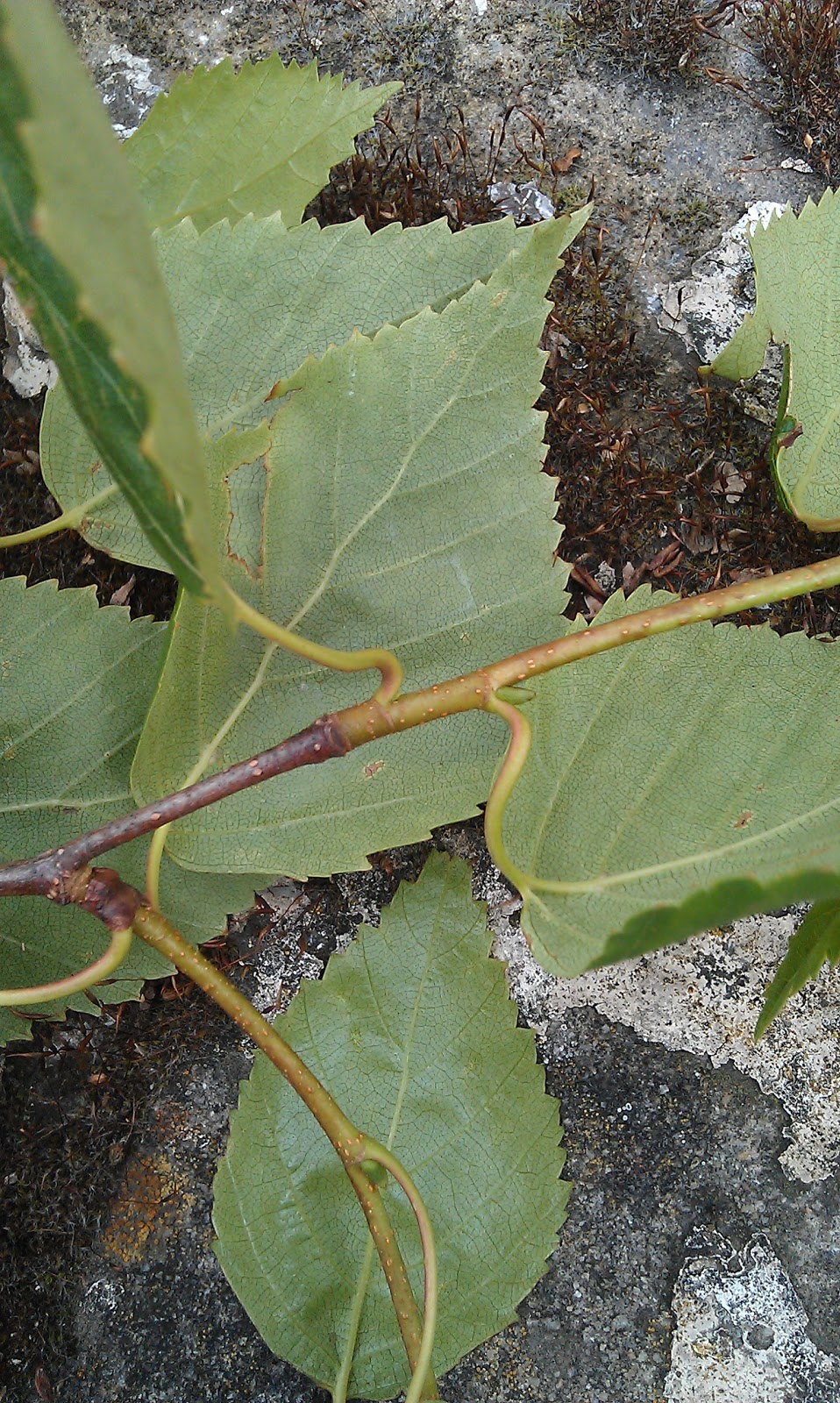
Betula - Birch Leaves Underside
Betula - Birch Leaves And New Growth


  • Leaves
  • necrosis, complete shriveling of foliage, Deformation, rolling of leaf blades, spots and felting, leaf blade holed or eaten, colonies of green insects on the leaves, leaf blade partially stripped and rolled forming a dry tube, mined leaves, color change
  • click to see list of causal agents


Back to top